Speaker says material witness statute
misused in terror investigations

by Natashia Gregoire

The practice of detaining individuals for the sole purpose of extracting testimony has become a commonly used tool in the U.S. War on Terror. That practice, however, raises some pertinent legal questions.

Whether such detentions are allowed under the Fourth Amendment was the focus of the law school’s annual Otis Lecture. Delivered by University of Tennessee law professor Joseph Cook, the lecture was the highlight of the September National Trial Judges conference hosted by the National Center for Justice and the Rule of Law.

Cook’s lecture, “The Detention of Material Witnesses and the Fourth Amendment,” addressed the increased holding of such witnesses since the start of the War on Terror.

“Historically, the power has been infrequently used but has become more common since [9/11],” Cook said.

The federal material witness statute authorizes the arrest and detention of people whose testimony is material in a criminal proceeding. Contrary to its implications, the statute has no connection to the controversial USA Patriot Act. The statute has been around since 1789. Before 9/11, the law was used almost exclusively by immigration authorities. Since then, Cook said, its use has been associated mainly with terrorist-related investigations.

“The unique feature of this statute is it authorizes the arrest and detention of individuals who have not and are not even suspected of committing any crime,” he said.

While the law was originally intended to assure the “availability of testimony of witnesses who might otherwise elude a subpoena,” it is being used today for a different purpose, Cook said.

According to the Human Rights Watch report “Witness to Abuse: Human Rights Abuses under the Material Witness Law since September 11,” the statute is being used to “secure the indefinite incarceration of those [the Department of Justice] has wanted to investigate as possible terrorist suspects.”

To address the Fourth Amendment implications of the detention of material witnesses, Cook highlighted several cases in which suspects were held under the material witness statutes and suggested there were serious reasons to question the legitimacy of detaining them as well as the way the law is being used in terror investigations.

“That the law is being used primarily against an insular and largely unpopular minority is not reason to ignore the constitutional question,” he said. “Indeed, it provides all the more reason to do so.”

Cook was the law school’s second Otis Lecturer. The annual lecture series is part of the NCJRL’s Fourth Amendment Initiative and focuses on search and seizure principles. The lectures honor James Otis, the man who ignited the American Revolution and whose words inspired the Fourth Amendment.

“Otis is an important figure in the development of Fourth Amendment jurisprudence,” said NCJRL director Thomas Clancy. “He was the first person in the United States to make many of the arguments that have been embodied in our search and seizure jurisprudence.”

The Fourth Amendment has more to say than any other part of the Constitution about our liberties, Clancy said. “It is the most litigated part of the Constitution and is implicated tens of thousands of times every day.”

The federal government can hold people without trial or without charges when it’s believed they have important information, Clancy said. “In terms of terrorism, it’s a technique that the feds now use to detain people they believe may have information but don’t have probable cause to arrest.”

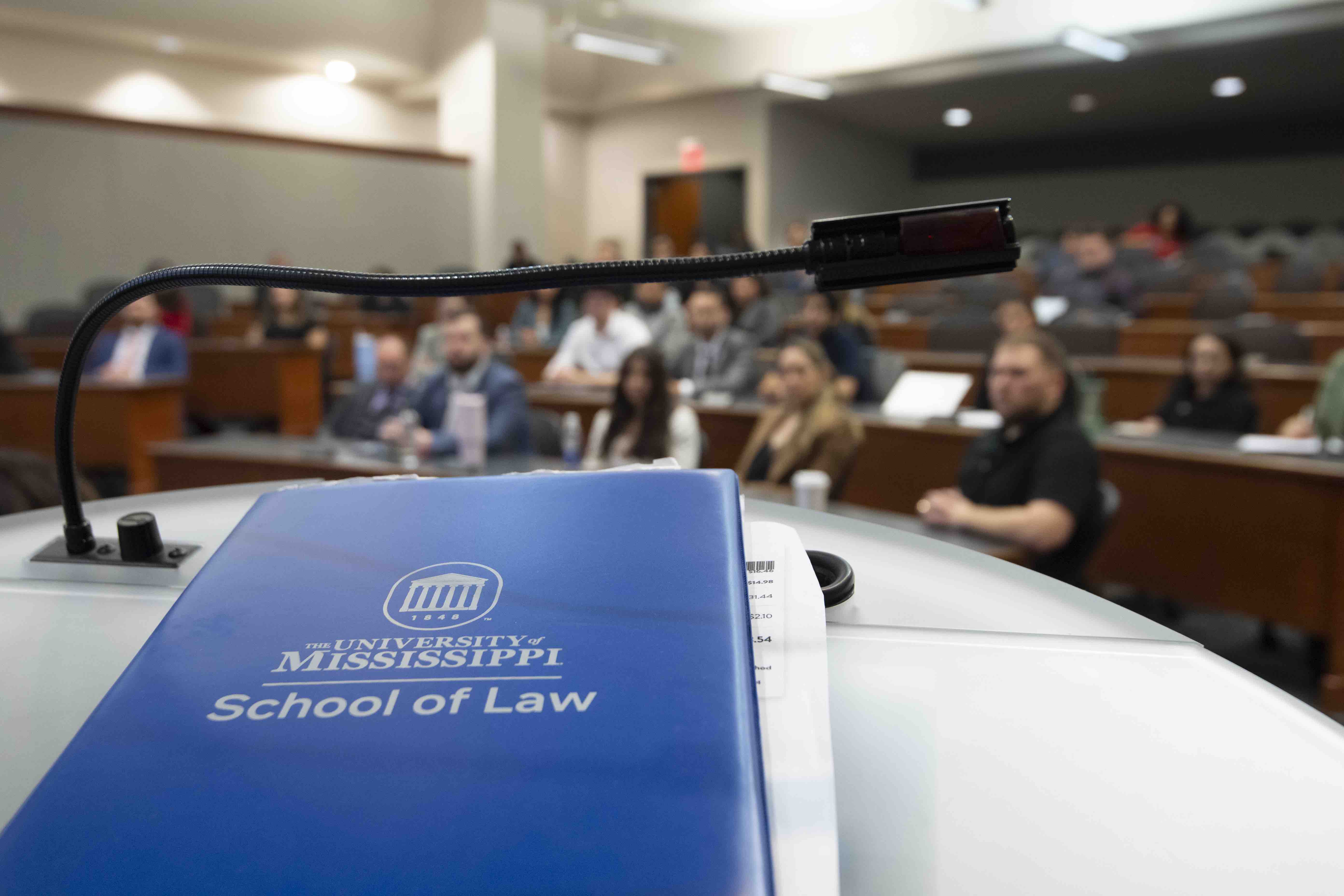
Cook’s lecture was the culmination of a four-day conference aimed at helping judges stay abreast of latest Fourth Amendment topics, such as how advances in technology are giving rise to an array of search and seizure issues. About 40 judges from across the country joined a crowd in the law school’s William N. Ethridge Moot Court Room for the lecture.

“The challenge to our system of justice and rule of law could not be clearer,” Cook said. “How can we remain true to the values of the freest society the world has ever known while responding effectively to those who would destroy us?”

A Gulfport native, Cook is the senior faculty member and Williford Gragg Distinguished Professor at the UT College of Law, where he has taught since 1965. Last year, he received the highest academic honor UT bestows on a faculty member.

Cook is a prolific author who has written books on such topics as constitutional and civil rights. His article “The Detention of Material Witness and the Fourth Amendment” will appear in the summer 2006 issue of the Mississippi Law Journal.

back to topUMLawyer home