Constitution Day panel addresses
Supreme Court appointments

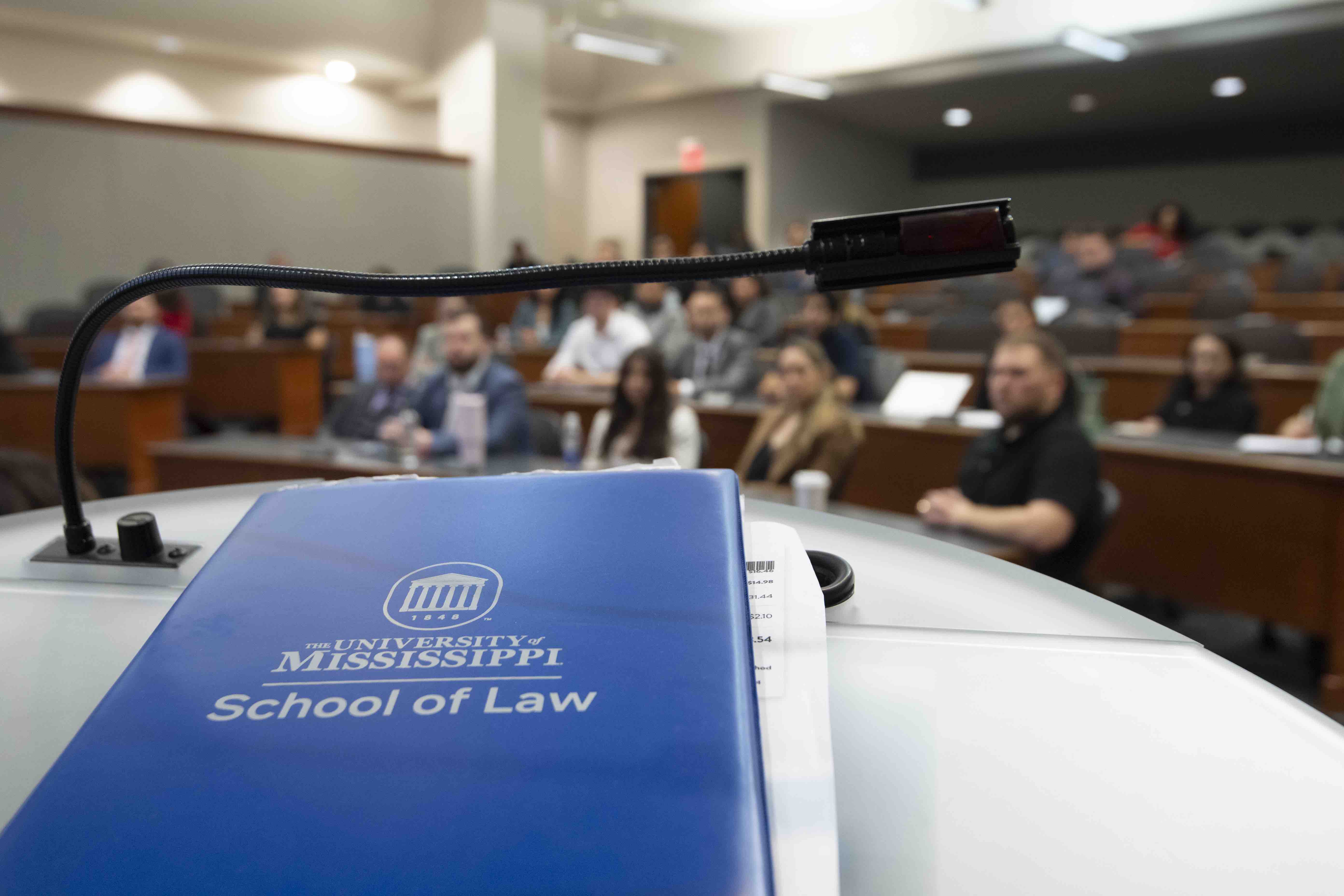
When considering debates over nominees to the U.S. Supreme Court, observers should remember that the Constitution defines Americans as a people and preserves liberties, Jack Nowlin told attendees at a university panel discussion in honor of Constitution Day.

Nowlin, an associate professor who teaches constitutional law, jurisprudence, criminal procedure and criminal law, discussed the judicial side of the Constitution during “Battle Over the Supreme Court: The Appointment and Confirmation of Federal Judges.” Sponsored by the Office of the Provost, the Sept. 19 program also featured Robert Haws, chair and professor of history, and John Winkle, professor of political science.

“The separation of powers and the system of checks and balances [found in the Constitution] is the key to understanding debates over political appointments,” Nowlin said.

Haws led off the discussion with a historical overview of the confirmation process of Supreme Court justices. He emphasized three distinct periods: 1910-1930, beginning with the first appointment by President Taft and running through the rejection of John J. Parker’s nomination; 1930-1968, when no Supreme Court nominees were rejected; and 1969-present, starting with the controversial rulings of the Warren Court.

Supreme Court nominations are inherently “a political act and a way for presidents to achieve presidential goals,” Haws said.

Nowlin pointed to four different views as standards for evaluating nominees to the Supreme Court: total senatorial deference to the president’s nomination, judging merit and qualifications apart from judicial philosophy, qualified consideration of judicial philosophy and total nondeference to the president’s nomination.

“We need to see disagreements as an interruptive matter,” Nowlin said. “We can be assured these debates will be continued. We are united in our fidelity to the Constitution, and this unity is as important as any of our disagreements.”

The political processes surrounding the nomination and confirmation of federal judges is vital, Winkle said.

“Today, every issue—whether political, social, religious, economic or scientific—becomes a legal issue,” he said. “Through naming justices to the Supreme Court, a president can influence the course of American politics for years.”

—Kara Givens

back to topUMLawyer home