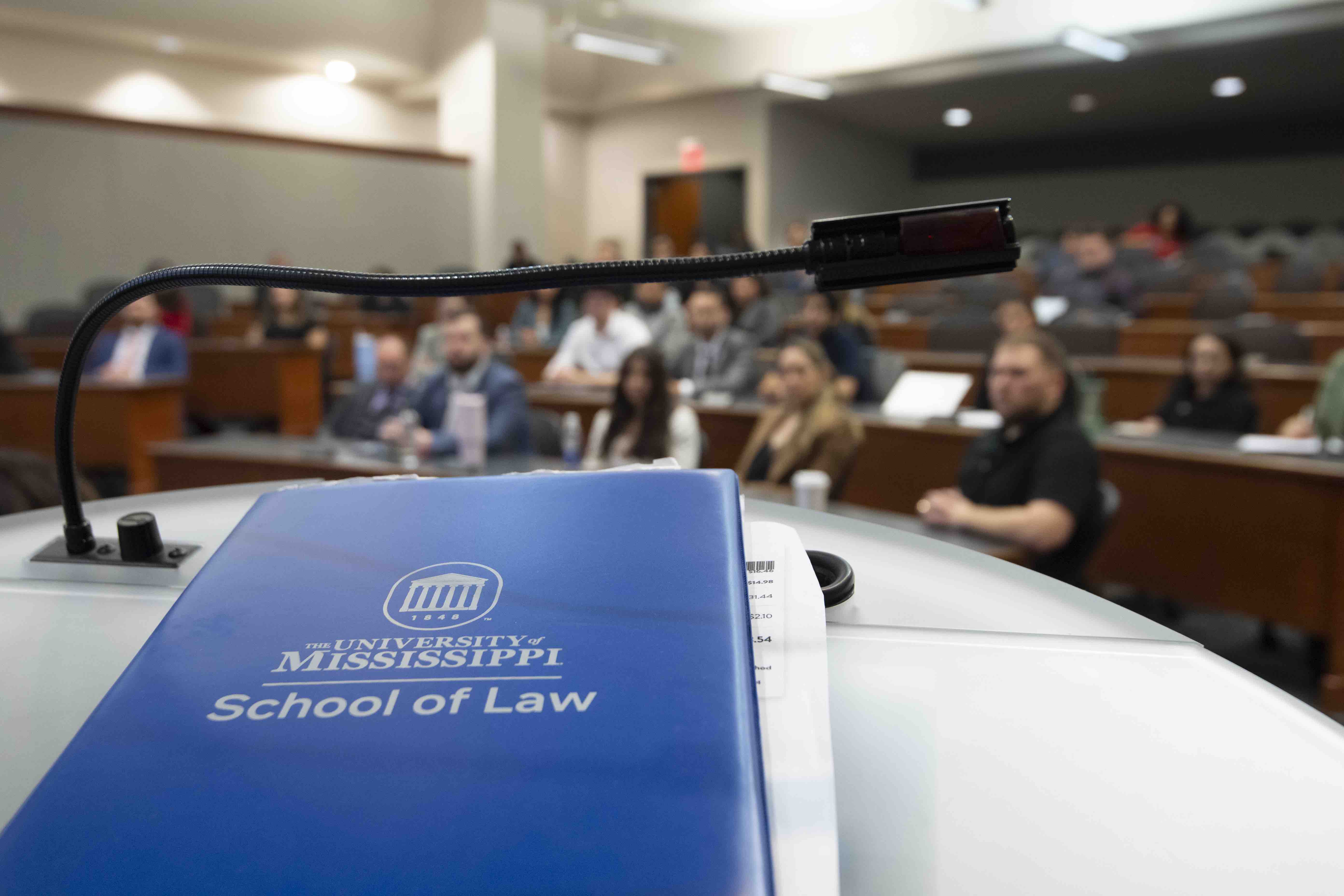
Beyond the Classroom

Educating students to perform in the real world

In addition to classroom instruction in substantive and proce­dural law, today’s modern legal education extends beyond the classroom. The School of Law offers several skills-training pro­grams in which students are taught basic lawyering skills, with particular emphasis on trial techniques.

CLINICAL PROGRAMS

Civil Legal Clinic

The law school’s Civil Legal Clinic, established by a gift from alumnus and best-selling author John Grisham, helps ensure that the less fortunate are served pro bono by the legal profession. It enables law students to take justice to the people.

Students enrolled in the Civil Legal Clinic head off campus with their briefcases—or backpacks—to interview clients, investigate cases and make court appearances. In the weekly clinic class, students learn interviewing, counseling, negotiation, drafting and advocacy skills. They then put those skills to work in the community as attorneys for low-income clients under the Mississippi Limited Practice Act. The program includes clinical units in Elder Law, Consumer Law, Child Advocacy, Legislation and Domestic Violence, and a “Street Law” Clinic in honor of its famous founder.

The clinic accepts cases that would not be fee-generating for attorneys or those where an attorney’s fee or court-appointed counsel are not provided for by statute. The students then work in teams, under faculty supervision, on at least two selected cases.

In addition to the clinic course, the law school plans to give the law student body additional opportunities to provide pro bono legal help on a more limited basis. For example, students may help hold workshops—or “street law” sessions—for groups such as residents of domestic-violence shelters, community organizations, or high-school and college students. These sessions often focus on topics such as housing and consumer, criminal and family law.

Many law students find their clinic experiences to be one of the most invigorating and challenging parts of their legal education. As third-year law student Carson Carney stated, “The Civil Legal Clinic was my first actual experience working with clients needing legal assistance. The active involvement that the mentors of the clinic allowed me has been priceless not only to my professional choices but also to my law school experience. The clinic gave me a window into possibilities that I might have missed if my law school career had been only classroom-oriented. I am forever grateful for this opportunity.”

Criminal Appeals Clinic

The National Center for Justice and the Rule of Law’s Criminal Appeals Clinic helps students and practicing attorneys receive the specialized training necessary to represent citizens awaiting review of their criminal convictions by appellate courts.

Third-year law students gain appellate advocacy skills using criminal law cases and participate in pro bono representation in cases on appeal to the Mississippi appellate courts. Under the director’s supervision, students are admitted to the limited practice of law and handle all aspects of criminal appellate cases through special appointment by the Mississippi Supreme Court.

The classroom component of the course instructs students on the basics of criminal appellate practice and procedure, including review of trial documents and transcripts, evaluation of legal and constitutional issues, concentrated research applications to the issues identified in the case, advanced “fact-centered” appellate brief-writing techniques and innovative oral-advocacy skills. As a special counsel of record, the student-attorneys sign off on the filed brief of the appellant for their first appearance in court and may continue their limited practice through additional credits for independent study.

The clinic also has created a continuing legal education seminar for Mississippi attorneys and has published a symposium issue of the Mississippi Law Journal, which proposes a criminal-appeals-clinic model program for other law schools to emulate.

Prosecution Externship Program

The Prosecution Externship Program is designed to prepare law students for careers as prosecutors by combining academic training with placements as externs in local offices. In the classroom, students study the substantive and procedural law a prosecutor needs to know, learn about the unique ethical and professional duties of a prosecutor, and complete practical exercises geared toward their eventual roles as prosecutors. As externs in prosecutor offices, third-year students are sworn in as limited practice student-attorneys and gain invaluable experience by observing and assisting prosecutors while earning academic credit. Recognizing that the vast majority of prosecutors work in smaller, rural prosecutor offices, the Prosecution Externship Program is devising means to help smaller prosecutor offices operate more efficiently and adapt to the needs of the changing legal environment.

Trial Advocacy Curriculum

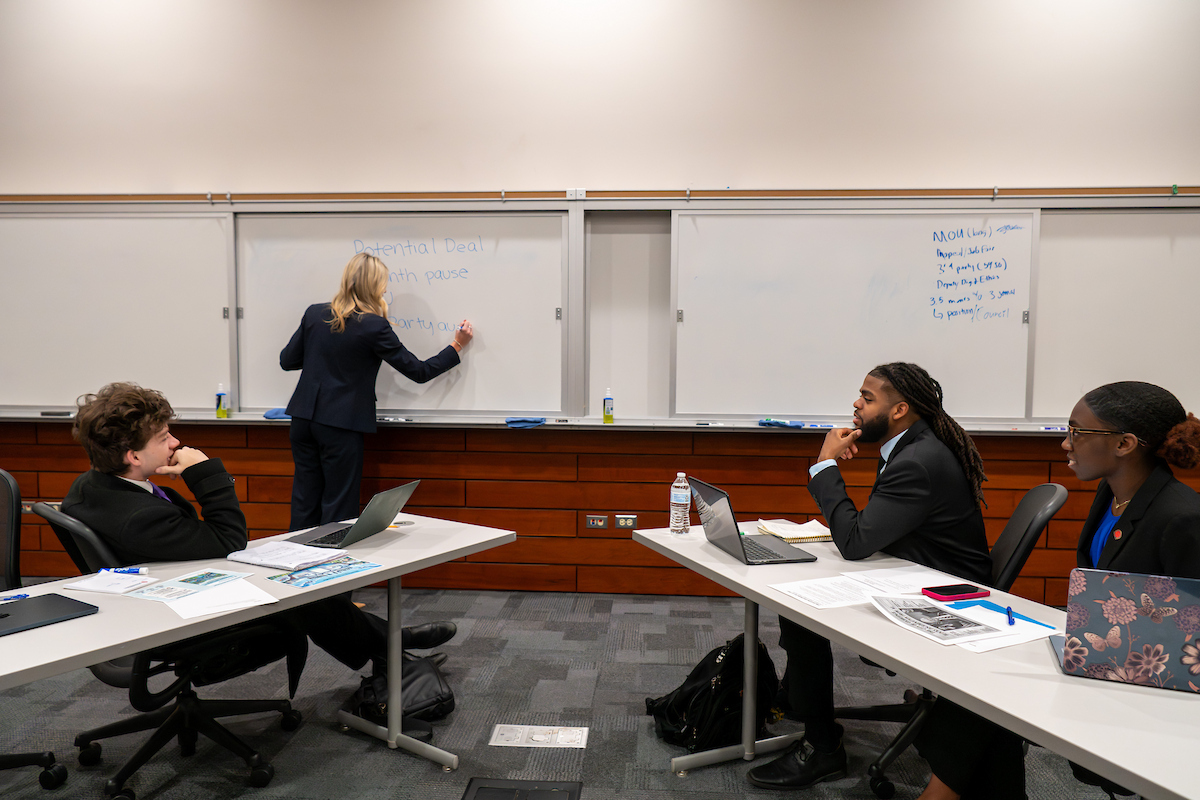
The School of Law offers a wide range of advocacy courses, including pretrial, trial and appellate advocacy. These courses, taught by full-time faculty and experienced practitioners, are among the most popular electives. Here, theory meets practice with students engaging in simulation exercises specially structured to explain the “whys” and the “hows” of the skills and techniques involved in litigation practice. Both criminal practice and civil practice are covered, enabling UM students to be well ahead of their peers upon entering the practice of law.

Public Service Internship Program

Qualified third-year students can earn up to 6 hours of academic credit by working as interns under the supervision of public defenders, judges and attorneys with government agencies. These experiences are a practical complement to the legal knowledge acquired in classes and can be an intensive study of specialized fields of law such as labor, employment, environmental, taxation or health law.

MOOT COURT

Moot Court Board and Mississippi Review of First Impressions

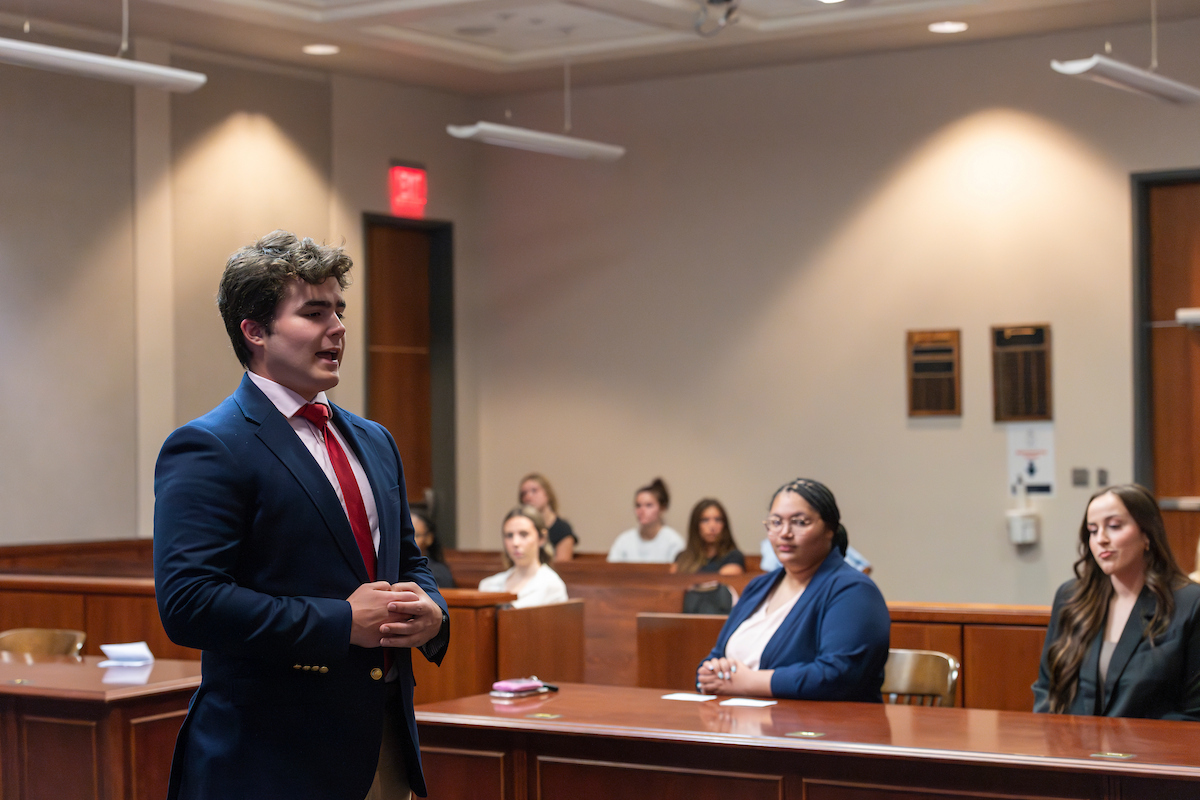
The Moot Court Board oversees several moot court competitions, including the Steen, Reynolds and Dalehite trial competition each fall and the McGlinchey Stafford oral-advocacy competition each spring. Members are selected through a competitive process requiring written and oral presentations. Unique to our program is the board’s publication, Mississippi Review of First Impressions. Each year, board members prepare bench memos on undecided issues of law currently pending before the judiciary. The most outstanding of these memos is selected for publication in the Review.

Moot Court Competitions

The University of Mississippi School of Law has a long tradition of active participation in national moot court competitions, where the best student teams from other law schools in the region and the nation compete for team and individual honors. These competitions include the prestigious National Moot Court Competition, sponsored by the Bar of the City of New York, and a number of specialized competitions in international, bankruptcy, trademark and environmental law.

Moot Court Competition Team Highlights

McGlinchey Stafford Oral Advocacy Competition

Steen Reynolds and Dalehite Trial Competition

Steen Reynolds and Dalehite National Trial Competition

Herbert E. Dewees, Jr., and Timothy L. Walsh

National Moot Court Competition

Currie Johnson Griffin Gaines and Myers

ABA National Appellate Advocacy Competition

National First Amendment Law Moot Court Competition

International NBLSA Negotiation Competition

Saul Lefkowitz Trademark Moot Court Competition

Duberstein Bankruptcy Moot Court Competition

Frederick B. Douglass Moot Court Competition

Philip C. Jessup International Law Moot Court Competition

The ABA Labor and Employment Trial Competition

The Gibbons Criminal Procedure Moot Court Competition

The International Institute of Space Law Manfred Lachs Space Law Moot Court Competition, North American Region

Law Journals

Mississippi Law Journal

Since 1928, the student-edited Mississippi Law Journal has served as an educational tool for students and a valuable research source for the legal community. The journal is published three times each year and includes articles by distinguished professors, judges and practitioners. In addition, the Mississippi Law Journal includes student-written case notes and comments. Each piece published is selected on the basis of excellence and topical interest.

Committed to the journal’s tradition of excellence in service to its subscribers, the students are regularly called on to research, write and edit material. Because of the demands of this work, the staff and editorial board include only those students who meet superior academic standards. A recent editor-in-chief of the Mississippi Law Journal characterized his work with the staff and board as the most rewarding of his law school career. “Leading one’s peers is never easy, but attempting to lead a group of extremely intelligent self-starters like these is indeed a challenge,” he said. Journal of Space Law The National Remote Sensing, Air and Space Law Center faculty regularly supervise an editorial team of 15-18 law student editors, staff and authors on the Journal of Space Law. It is the oldest journal dedicated to space law and is the only one of its kind in the United States. The Journal of Space Law is an international publication with more than 300 subscribers, including law school libraries around the nation and the world; the state departments, foreign ministries, aerospace companies and space agencies of many nations; the Supreme Court libraries of various states; and defense and security establishments in the United States and around the world.

Past Lectures

JAMES MCCLURE MEMORIAL LECTURES

Justice Antonin Scalia, United States Supreme Court

General Vernon Walters

U.S. Senator Thad Cochran

Justice Clarence Thomas, United States Supreme Court

Justice Sandra Day O’Connor, United States Supreme Court

DUNBAR LECTURES IN PHILOSOPHY AND LAW

Professor Brian Leiter

Professor Richard A. Epstein

Professor Ronald Dworkin

Professor Joel Feinberg

MATTHEWS LECTURES

Professor John C. Coffee

Dean Frank Wu

Professor Walter Wadlington

Professor Roberta Romano

Professor Edward J. Larson

Judge Phyllis A. Kravitch

John R. Grisham Jr., attorney and author

Judge Constance Baker Motley, U.S. District Court, Southern District of New York

Law Student Organizations

A number of very active law student groups enjoy wide participation from the law student body. These organizations present guest speakers and seminars, engage in community-service projects and sponsor student social activities.

Law School Student Body

The LSSB is the student-run governing body of The University of Mississippi School of Law. The organization seeks to serve students by providing a cohesive voice on issues impacting students. LSSB representatives serve on faculty committees ranging from student/faculty relations to grading policies, as well as space allocation.

The LSSB is responsible for organizing a variety of activities, including annual social events such as the Halloween party and Barristers Ball. The LSSB also seeks to provide support to all law school student organizations. The student body elects the LSSB officers annually, and all law students are encouraged to run.

Public Interest Law Foundation

One of the most active organizations at the School of Law is the Public Interest Law Foundation. The student-run organization raises money to support students working in public-interest jobs with such groups as the offices of public defenders and domestic violence shelters.

Black Law Students Association

The Constance Slaughter-Harvey Chapter of the National Black Law Students Association is an organization created and designed to articulate and promote the professional needs and goals of black law students and to foster and encourage professional competence. BLSA participates and conducts several activities every year to facilitate a well-rounded educational experience for its members. As an organization, BLSA strives to facilitate interaction between its members and the rest of the law school and Ole Miss community.

Law Association for Women

LAW is a member-driven organization focused on exploring relevant issues and opportunities for women in the legal field. The organization focuses on hosting a variety of events for the student body, from networking and informational sessions to activist speakers and presentations. LAW events include the Fall Social, the Spring Roundtable and Breakfast with the Dean.

Other Organizations

American Constitution Society

Christian Legal Society

Criminal Law Society

Dean’s Leadership Council

Delta Theta Phi

Environmental Law Society

Federalist Society

Gorove Society of International Law

Mississippi Defense Lawyers Association— Student Division

Phi Alpha Delta

Phi Delta Phi

Mississippi Association for Justice—Student Division

American Bar Association—Student Division

American Association for Justice—Student Division

Student Health Law Association